
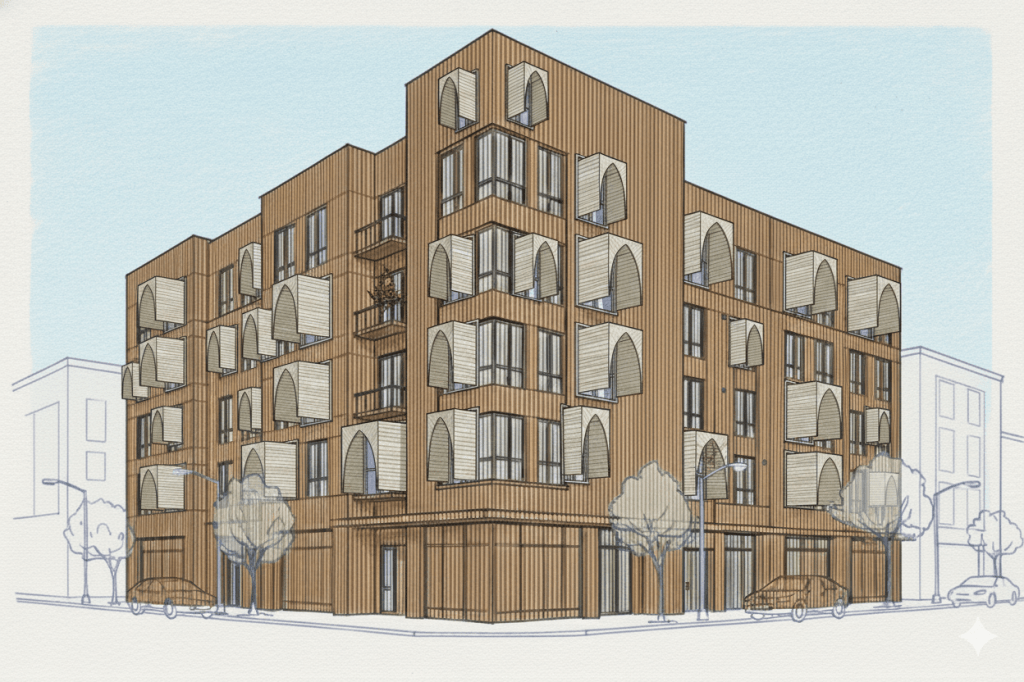
District 6 Apartments in Des Moines, Iowa
My thesis explores a very simple question with big consequences: how can we keep homes comfortable as extreme heat waves become more frequent, without relying only on air conditioning? Most “smart façade” research focuses on office buildings, but many U.S. apartments and houses still overheat and struggle with glare and too much sun. In this project, I tested two types of operable exterior shading, horizontal panels and curved vertical panels, on a typical residential façade across all 16 U.S. climate zones. Using ClimateStudio, I simulated how these panels move in response to sun position and solar radiation, then measured how much they lower indoor temperatures, reduce overheating hours, and cut glare while still keeping good daylight.
The results show that the curved vertical system with deeper panels performs best overall, especially in hot–dry climates, where it can lower peak indoor temperatures by several degrees and significantly reduce overheating. It also brings meaningful annual glare reductions without leaving the space too dark. Together, these findings suggest that it is not just the shape of the shading that matters, but how it responds to climate and season over time, pointing toward more responsive, seasonally aware shading strategies for future residential design.

Interior View of the Shading
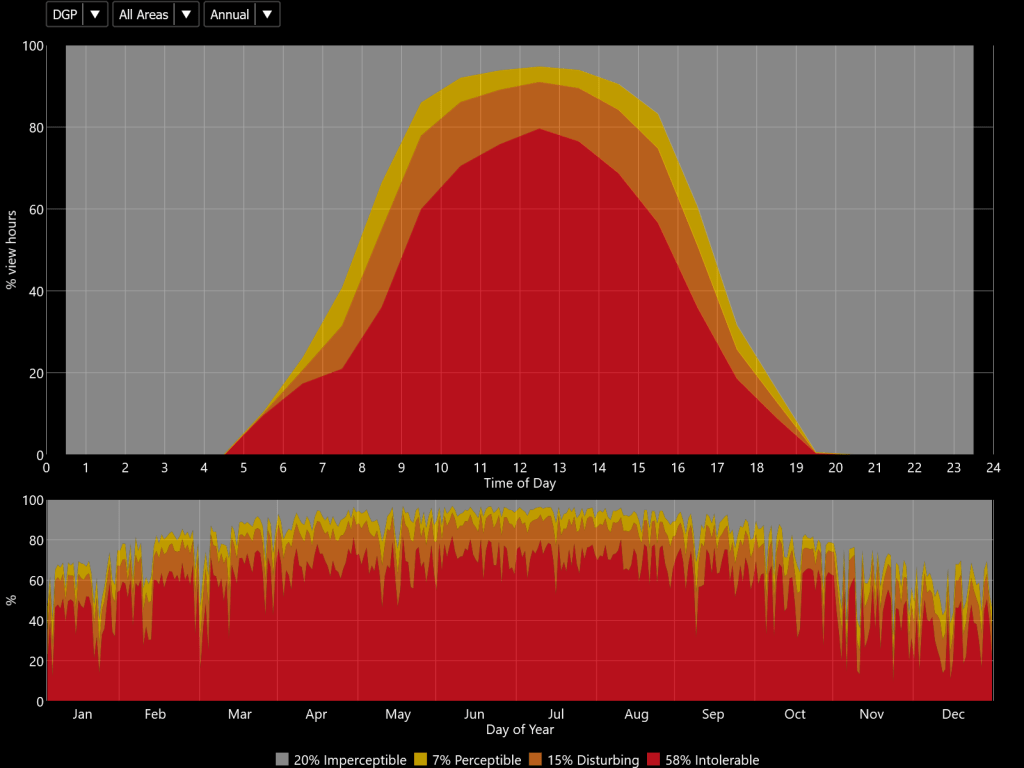
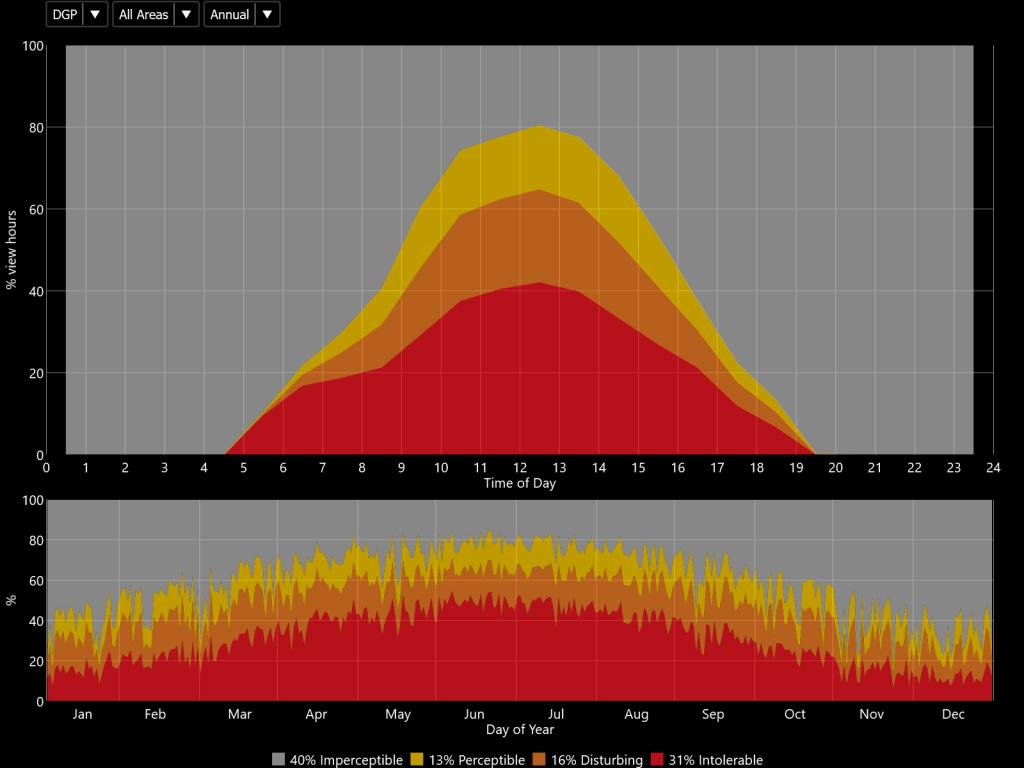
Climate Studio Annual Glare Charts
First Image generated by Google Gemini©
 Kimia Sharifi
Leave a comment